
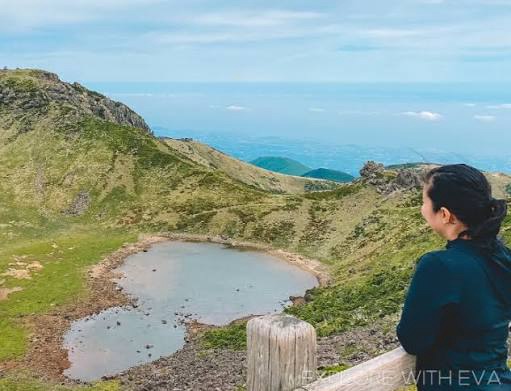
🏔️ The Soul of Jeju — Climb Korea’s Highest Peak
Rising proudly from the center of Jeju Island, Hallasan Mountain (한라산) is South Korea’s tallest peak at 1,947 meters. Known for its breathtaking crater lake, Baengnokdam, and ever-changing scenery, Hallasan is a bucket-list hike for locals and travelers alike. Whether you’re an experienced trekker or a casual hiker, this 2025 guide will help you conquer Hallasan safely and enjoyably.
🥾 1️⃣ Choosing the Right Trail
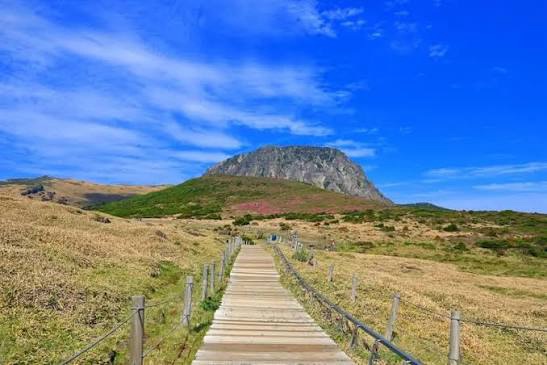
There are five major trails on Hallasan, but only two reach the summit. The rest are perfect for scenic mid-level hikes and forest exploration.
- Seongpanak Trail (성판악코스) — 9.6 km one way (approx. 4–5 hours up)
The most popular route to the summit, offering a steady incline through lush forests. Less steep but longer than Gwaneumsa. - Gwaneumsa Trail (관음사코스) — 8.7 km one way (approx. 5–6 hours up)
The most challenging yet scenic trail, with streams, waterfalls, and panoramic views. Recommended for experienced hikers. - Eorimok Trail (어리목코스) — 4.7 km
A moderate forest trail leading to Witseoreum Shelter. Great for half-day hikes. - Yeongsil Trail (영실코스) — 5.8 km
Offers dramatic rock formations and cloud views. Connects with Eorimok for a loop option. - Dulle-gil Trail (둘레길) — 21 km
A circular trail around the mountain’s base — perfect for nature lovers and cyclists.
⏰ 2️⃣ 2025 Entry Rules & Reservation Tips
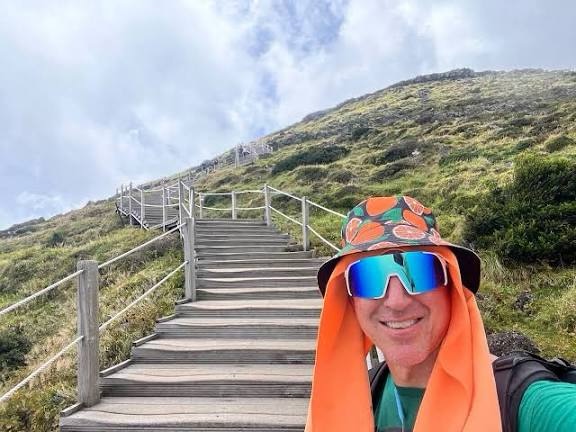
As of 2025, reservations are mandatory for summit trails due to environmental protection policies. Hikers must register online at the Hallasan National Park website.
- 🚶 Summit Entry Hours: Entry closes by 9:00 AM (Seongpanak) and 8:00 AM (Gwaneumsa).
- 📅 Reservation Required: Limited daily quota for summit hikers — book early, especially on weekends.
- 📲 QR Code Check-in: Required at the trailhead for access control.
Failure to register in advance may result in being turned away at the park entrance, even if you arrive early.
🎒 3️⃣ What to Pack for Your Hallasan Hike
Weather on Hallasan changes rapidly, even in summer. Pack wisely for all conditions.
- 🧥 Lightweight windproof jacket (temperatures drop at the summit)
- 🥾 Comfortable waterproof hiking shoes
- 💧 1–2 liters of water + energy snacks
- 🕶️ Sunglasses, sunscreen, and hat for UV protection
- 📱 Portable charger and downloaded offline maps (no signal near summit)
Pro tip: Bring warm layers even in July — it’s often 10°C colder at the top than in Jeju City!
🌸 4️⃣ When to Hike Hallasan (Best Time in 2025)
Each season transforms Hallasan into a different world:
- Spring (April–May): Azalea blossoms paint the slopes pink and purple — the most photogenic time of year.
- Summer (June–August): Lush greenery and misty forests, though afternoon fog is common.
- Autumn (October): Fiery red and gold foliage — peak hiking season with crisp air and clear skies.
- Winter (December–February): A snow-covered wonderland. Trails may close due to icy conditions, but the scenery is magical.
🍱 5️⃣ Food, Rest Stops & After-Hike Tips
While no stores operate inside the park, you can enjoy local Jeju specialties before or after your climb:
- Jeju Black Pork BBQ — A post-hike must! Try Hwarojeong near Jeju City.
- Omegi Tteok — A chewy rice cake made with mugwort and red bean.
- Hallabong Juice — Locally grown Jeju oranges in refreshing juice form.
After descending, consider visiting Eorimok Visitor Center for exhibitions on Jeju’s volcanic landscape and local wildlife.
💡 Final Thoughts
Climbing Hallasan isn’t just a hike — it’s a spiritual journey through Korea’s most treasured natural landmark. Whether you reach the crater rim or enjoy a mid-level forest path, the experience will leave you refreshed and connected to Jeju’s volcanic heart.
In 2025, new digital reservation systems and multilingual trail signs make Hallasan more accessible than ever. Lace up your boots and get ready to touch the sky!
💬 Frequently Asked Questions
1. Do I need a guide to climb Hallasan?
No, Hallasan trails are well-marked and safe for solo hikers. However, joining a guided tour offers extra safety and insights into local ecology.
2. How long does it take to reach the summit?
Expect 4–6 hours to reach the top and 3–4 hours to descend, depending on your chosen trail and pace.
3. Is there public transport to Hallasan?
Yes. Buses run from Jeju City and Seogwipo to Seongpanak and Eorimok trailheads daily. Taxis are also available but can be expensive for round trips.
4. Can I camp overnight on Hallasan?
Camping is not allowed inside Hallasan National Park. Instead, stay at nearby pensions or eco-lodges in Jeju City or Seogwipo.
 Discover The Real Korea
Leave a comment