
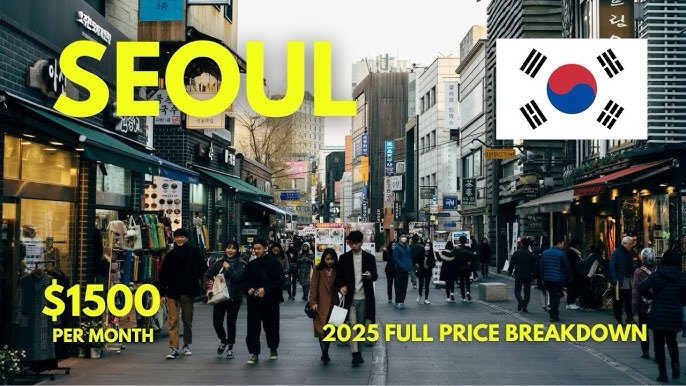
💰 Living in Korea 2025 — What It Really Costs
If you’ve ever dreamed of living in Korea — especially in Seoul — you’ve probably wondered how much it actually costs. After spending over a year here, I can say: Korea in 2025 isn’t cheap, but it’s not impossible either. From rent to coffee, here’s my honest review of what daily life costs in one of Asia’s most dynamic cities.
🏠 Housing Costs: Seoul’s Biggest Expense
Let’s be real — housing in Seoul is expensive. Most foreigners choose between a one-room officetel or a shared apartment. Here’s what I’ve personally paid and heard from other expats:
- Officetel near Hongdae or Gangnam: ₩900,000–₩1,400,000 per month (USD 650–1,000)
- Shared apartment (2~3 people): ₩500,000–₩800,000 per month (USD 360–600)
- Deposit (jeonse/wolse): Most landlords require a ₩5–10 million deposit for short-term leases.
💬 Tip: If you’re staying long-term, consider using “Gosiwon” (a tiny studio room) — it’s small but affordable, starting around ₩400,000/month near universities.
🍜 Food & Dining: Eating Well Without Going Broke
One thing I love about Korea — you can eat delicious food at almost any price. From cheap convenience stores to cozy BBQ spots, there’s something for every budget.
- Street food (tteokbokki, hotteok, etc.): ₩3,000–₩6,000 per item
- Casual Korean meal (bibimbap, kimchi stew): ₩8,000–₩12,000
- Korean BBQ with friends: ₩20,000–₩35,000 per person
- Starbucks coffee: ₩5,500–₩7,000 (yes, it’s pricey)
Cooking at home is cheaper, but groceries aren’t exactly cheap. Imported food items can double your grocery bill. I usually spend about ₩300,000–₩400,000 a month on food when eating out a few times a week.
🚇 Transportation: Efficient and Affordable
Korea’s public transportation system is one of the best in the world. You can go anywhere in Seoul with a T-money card for just ₩1,400–₩1,700 per ride. The subway is clean, safe, and always on time.
- Subway & Bus: Around ₩70,000/month for daily commuting
- Taxi base fare: ₩4,800 (rising quickly with distance or late-night rides)
- KTX (High-speed train): ₩60,000–₩70,000 for Seoul → Busan
💬 Pro Tip: Use apps like KakaoT or Naver Map — they’re lifesavers for getting around without confusion.
📱 Utilities & Daily Life
Internet speed in Korea is amazing — no surprise there! Most apartments include internet in their rent, but if not, it’s around ₩30,000/month. Phone plans can vary depending on your data needs:
- Phone plan: ₩45,000–₩70,000/month (with unlimited data)
- Utilities (electricity, gas, water): ₩80,000–₩150,000/month depending on season
- Gym membership: ₩50,000–₩80,000/month
💬 My tip: winter heating can be expensive — expect your gas bill to double in January and February.
🎭 Entertainment & Lifestyle
Life in Seoul isn’t just about work. Koreans know how to have fun — from karaoke and night markets to hiking and cafés. Here’s what my average month looks like:
- Movie ticket: ₩13,000–₩15,000
- Café hopping weekends: ₩20,000–₩30,000
- Drinks with friends: ₩30,000–₩60,000 (depends how much soju you can handle 🍶)
Compared to other big cities like Tokyo or New York, I find Seoul to be more budget-friendly when it comes to social life — you get quality experiences for a reasonable price.
💡 Final Thoughts — Is Korea Expensive in 2025?
Living in Korea in 2025 isn’t cheap, but it’s worth every won. I’d say an average single person in Seoul spends around ₩2.2–₩2.8 million/month (USD 1,600–2,000) for a comfortable lifestyle. If you live outside Seoul, your cost can drop by 30% easily.
From the clean streets and fast Wi-Fi to the amazing food and vibrant nightlife, Seoul offers one of the most dynamic urban experiences in the world. Whether you’re here to study, work, or explore, the cost of living is balanced by the quality of life and cultural richness Korea offers.
Would I recommend living here? Absolutely — just be ready for expensive coffee, small apartments, and unforgettable experiences.
 Discover The Real Korea
Leave a comment